Your First Marathon!

Nobody starts out as a marathon runner. Most people who've crossed a finish line will tell you the same thing: they never thought they were "the type." Here's what you actually need to know.
01
Why bother?
The reasons people sign up are all over the place — a health wake-up call, a milestone birthday, grief, a New Year's resolution. It doesn't matter. What matters is that training for 26.2 miles will change you before you even reach the start line. The goal has a way of reorganising your priorities.
02
Picking your race
26.2
miles to glory
Training time is highly variable and depends on your goals and current fitness level. The last thing you want is to hit big weekly numbers too soon and end up injured. For your first race, look for a flat course, reasonable cut-off times, and good crowd support.
Big city marathons offer incredible atmosphere; smaller local races are less overwhelming. Neither is wrong.
For me, it's all about the great outdoors and being amongst nature on the trails. If you're a bit more heavy set like me, being off-road can help manage and vary the impact on your lower limbs — and the scenery isn't bad either.
03
Training: the basics
Your training will revolve around one thing: the long run. Everything else supports it.
Most of your runs should feel slow — uncomfortably slow. That's correct. Rest days are not optional; recovery is where fitness is built.
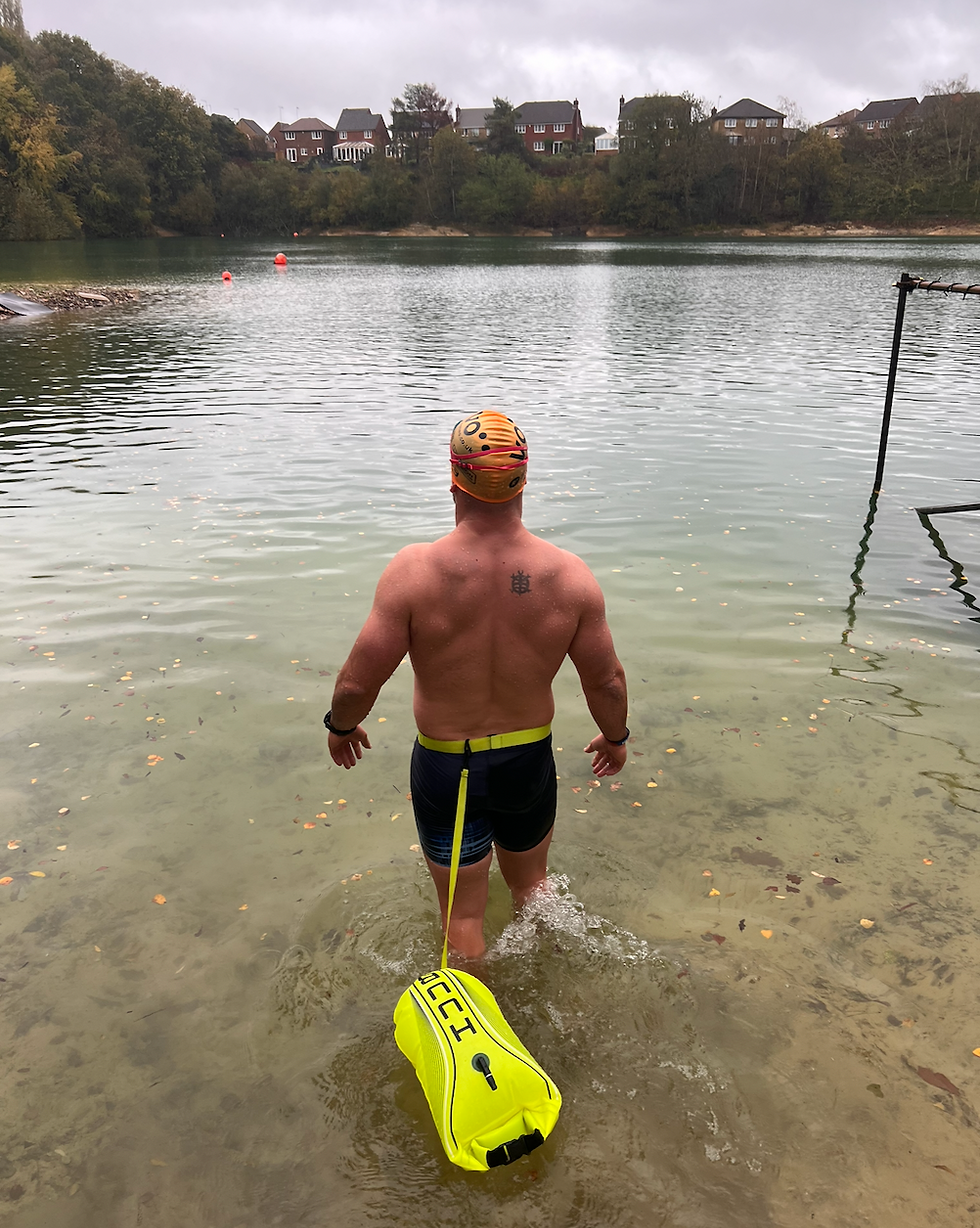
Strength work and cross-training (cycling, swimming) will keep you injury-free far longer than running every day will. I love blending training modes — the long-term benefits and reduction in injury risk simply cannot be overlooked.
This is where a good coach has the edge over AI platforms. Monitoring your health and recovery data, and checking in to make sure you're recovering at the right rate — that's something an algorithm can't replicate.
04
The stuff nobody talks about…
01 Chafing nipples, blisters, and black toenails are rites of passage. Vaseline is your friend.
02 The mental wall hits harder than the physical one. You are not born with resilience — you learn it. Around mile 18–20, your brain will tell you to stop. It's lying.
03 Life doesn't pause for training. Balancing long runs with work and family is genuinely hard. Build your schedule around your long run, not the other way around.
05
Race day
Nothing new. No new shoes, gels, or gear on race day. Full stop.
Start slower than you think. Going out too fast is how most first-timers blow up.
Trust your training. The crowd energy will tempt you — resist it in the first half.
06
After the finish line
You'll feel euphoric, then wrecked, then oddly flat. Post-marathon blues are real — the thing you've been working toward for months is suddenly over. Give your body two to three weeks of easy movement before thinking about what's next.
And you will think about what's next.
🍺Oh… and don't forget that finish line beer (or two). You've more than earned it.
The marathon isn't really about running. It's about finding out what you're capable of when you commit to something hard.

Comments